
Tongzhou District has a long history and rich culture. It has been an important transportation hub and a key area for canal transportation and storage in the eastern part of Beijing. It played a vital role in safeguarding, constructing, prospering, and stabilizing Beijing, earning the reputation of being "the third Tongzhou after the first Beijing and the second Tianjin."
During the late Neolithic period, human activities were already present in Tongzhou. In the 12th year of Emperor Gaozu of the Western Han Dynasty (195 BC), the county was established and named Lu County. In the first year of Emperor Guangwu of the Eastern Han Dynasty (25 AD), the county was renamed Lutai County, derived from its proximity to water. The county seat was originally located in the ancient city of Huguzhuang Township but was moved several times. It wasn't until the Northern Qi Dynasty (550-577) that it settled in its current location. The Great Wall of the Northern Qi Dynasty once extended to the central part of the county. From the Eastern Han Dynasty to the Sui Dynasty, Luguo County served as the county seat of Yuyang Commandery. During the Liao Dynasty (1021-1031), Luyu County and Quanzhou (now Wuqing County) were separated to establish Kuangyin County. The Jin Dynasty built warships on the banks of the Lushui River to attack the Song Dynasty. In the third year of Tiande (1151), the county was established as a prefectural city called Tongzhou, with a county government inside the city. In the first year of the Hongwu reign of the Ming Dynasty (1368), Lutai County was incorporated into Tongzhou. In the 16th year of the Shunzhi reign of the Qing Dynasty (1659), Kuang County was merged into Tongzhou. During the Jin, Yuan, Ming, and Qing dynasties, when Beijing became the capital, the construction of city walls, palaces, imperial tombs, and gardens relied heavily on water transportation from the southeast. Throughout history, the rivers were managed, and national granaries were built. Since the Yuan Dynasty, Tongzhou had been a place for canal transportation, and the Ming and Qing dynasties stationed a large number of troops for farming and defense. Tongzhou became a center for canal transportation, storage, and administration in the eastern part of Beijing, leading to its economic, trade, and cultural prosperity. In 1914, Tongzhou County was renamed Tongxian County. On December 14, 1948, the entire county was liberated, and Tongzhou Town and Guanxiang Village became Tongzhou City. After August 1949, Tongzhou City and Tongxian County were parallel to each other under the jurisdiction of the Tongxian Special District of Hebei Province. In April 1958, it was transferred to Beijing and the county and city merged to form Tongzhou District. In February 1960, it was renamed Tongxian County again. In April 1997, with the approval of the State Council, the county was abolished and became Tongzhou District. On May 27, 2016, the Political Bureau of the CPC Central Committee held a meeting to study and deploy the planning and construction of Beijing's sub-center for the first time, marking a new chapter in the development and construction of Tongzhou District.
Tongzhou has always been well-connected by land and water transport and has served as a key area for grain storage and canal transportation between the north and south. The area is rich in rivers and benefits from numerous boats and irrigation. During the Qin Dynasty, grains were transported northward through the Baihe River, opening up water transportation in Tongzhou. During the Eastern Han Dynasty, Wang Ba opened the Wenshui Canal (now Wenyu River) for canal transportation. During the Northern Qi Dynasty, Hulü Xian opened the Gaoliang River (Bahe River), which converged with the Wenshui River and entered the Lushui River. During the Sui Dynasty, the Yongji Canal was opened, connecting the southern part of the county to Hangzhou. During the Liao Dynasty, Xiao Taihou River was opened for grain transportation from Liaodong to Nanjing (now Beijing). During the Jin Dynasty, the Zha River was connected to the Lushui River for water transportation. During the Yuan Dynasty, the Grand Canal from Beijing to Hangzhou was dredged, Guo Shoujing excavated the Tonghui River, built locks and dams, and applied the ladder navigation system. Southern grains were transported through Zhangjiawan to Jishuitan in Dadu (now Beijing). During the Yongle reign of the Ming Dynasty, the canal waterways were improved. In the seventh year of the Jiajing reign (1528), Wu Zhong changed the downstream river course of the Tonghui River to enter the canal from the north of the county town, and along the river, five locks and two dams were built, enabling grain transportation to Beijing. This continued until the end of the Qing Dynasty, benefiting the area for 370 years. The highest annual shipment reached 6.46 million shi (a unit of volume for grain), and the maximum storage capacity in Tongzhou reached 5.13 million shi. The canal transportation played a crucial role in connecting the country. Tongzhou was considered the elbow joint of the canal throughout various dynasties. Emperor Kangxi visited Tongzhou 27 times. Since the Yuan Dynasty, infrastructure has been improved, regulations established, and important officials in charge of canal governance. The canal meandered like a dragon, controlling the waterways from Beijing to Hangzhou. Thousands of boats sailed on the river, while carriages and horses traveled on the land. The city was filled with bustling markets and vibrant songs. Tongzhou became a renowned commercial port at the northern end of the Beijing-Hangzhou Grand Canal. Since the 18th National Congress of the Communist Party of China, Tongzhou District has been planning and constructing Beijing's sub-center with high standards and high starting points, promoting high-quality integrated development with the three northern counties, and contributing to the coordinated development of the Beijing-Tianjin-Hebei region.
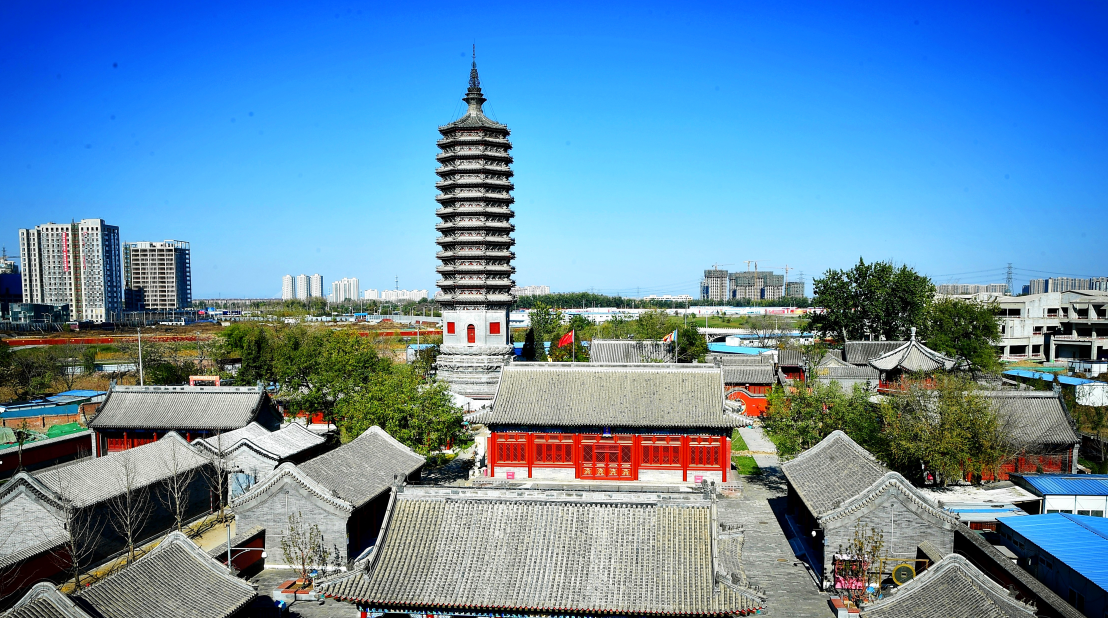
Situated at a crucial intersection of land and water, Tongzhou has long attracted scholars and writers who have contributed to its rich cultural heritage. Since the Jin Dynasty, literary creation in Tongzhou has flourished, leaving behind a large amount of poetry, writings, and ten local history books by native and visiting literati. Currently, there are eight national-level cultural heritage sites in Tongzhou, including the Former Residence of the Female School in Fuyu, Boyou Building, Luhu Middle School's original teaching building, Botang Pavilion, the teaching building of Xiehe Academy, Beijing Nursing School's Western-style building, the Tongzhou section of the Beijing-Hangzhou Grand Canal, the Rendeng Pagoda containing Buddhist relics, and the Zhangjiawan City Wall Ruins. There are also six municipal-level cultural heritage sites, including the tomb of Li Zhuowu, Feng Yuxiang's campsite in Tongyingpan, Tongzhou Mosque, Dacheng Hall (Tongzhou Confucius Temple), the former site of the headquarters of the Pingjin Campaign in Songzhuang, and the ruins of Hanlu County. Tongzhou is also home to two national-level intangible cultural heritages: Mianren (a type of soup) and flower inlay craftsmanship. It has seven municipal-level intangible cultural heritages, including the Tongzhou Canal Dragon Lantern, Tongzhou bone carving, Tongzhou Lüza pastry, Dashunzhai sugar cakes, Tongzhou windmills, Tongzhou canal boatmen's folk songs, and Yanshou sacred music. During the Ming and Qing dynasties, there were state schools and academies, as well as numerous private schools and charity schools. Luhu Academy was the highest institution of learning in the ten prefectures under the jurisdiction of the Eastern Road Department. The Gongyuan served as the imperial examination.

